


Sound
Moving on to sound, I find the default tuning on the 2nd Gen more palatable than Gen 1, which was already a big improvement over Bose’s older headphones.
For commuting or flying, the stock tuning is perfectly fine. That said, since there’s EQ available in the app, I definitely take advantage of it.
The EQ can be accessed through the Bose app, and you’ll want to tweak it based on your preferences and even how the headphone fits your head. Personally, I dial down both the bass and the treble slightly to achieve a more balanced sound. There’s still plenty of bass — which I actually prefer for ANC headphones — but the midrange becomes less recessed and much more enjoyable.
Overall, this is the best sound presentation I’ve experienced from a Bose headphone. It feels less compressed and less obviously “Bluetooth-sounding” than before. Of course, a quick A/B comparison with a good wired headphone will still reveal its limitations, but for what it is, I genuinely enjoy how it sounds.
One important thing: make sure you let the headphone perform its ear scan at the start. To do this, wear the headphone while it’s turned off, then turn it on while wearing it. When the voice prompt plays, that’s when it scans your ears to optimize the sound based on your ear shape.
Back in the app, aside from EQ, you also get access to various listening modes, the ability to fine-tune the level of noise cancellation, and other settings. Just like before, the app can still be a bit finicky — sometimes it doesn’t immediately detect that the headphones are connected, which can cause small delays when changing settings.
USB-C Audio
This is a pretty big addition. USB-C wired audio allows you to bypass Bluetooth compression entirely and listen to 16-bit lossless audio, assuming your files and source support it.
If you’re mostly listening to Spotify or YouTube, the difference is honestly minimal. But the great thing is that all of Bose’s DSP features — EQ, ANC, and sound profiles — still work in wired mode.
With higher-resolution files, I do notice a slightly cleaner and more refined sound. That said, for casual listening or commuting, I’m perfectly happy ditching the cable and using them wirelessly.
Comparisons
I don’t currently have other ANC headphones on hand for direct comparisons, so most of this is based on memory.
Compared to the QC Ultra 1st Gen, the 2nd Gen sounds more balanced — still bassy with sparkly highs, but less aggressively V-shaped.
Against the Sony XM5, I actually find the XM5 even more V-shaped, with an upper-bass emphasis that bleeds into the midrange and makes it sound a bit woolly. That said, all of these headphones can be EQ’d and tuned to taste.
In terms of stock tuning, I still prefer the AirPods Max, mainly because of its more linear bass and mids, along with airier highs. It sounds less like a “typical ANC headphone,” which I personally enjoy.
Noise Cancelling
Since I don’t have the original Quiet Comfort Ultra with me, it’s hard to quantify exactly how much better Gen 2 is compared to Gen 1. But the QC Ultra has always been among the best when it comes to noise cancellation, and if anything, Gen 2 has at least maintained — if not slightly improved — that performance.
In real-world use, whether on a plane or commuting by train, it cancels a significant amount of noise, and I’m very satisfied with it. Noise cancelling is Bose’s forte, so this really isn’t something I’d worry about when considering this headphone.
I’d say it’s on par with, if not slightly better than, the XM5. At this point, improvements are becoming more marginal — not because companies are doing a bad job, but because ANC technology is already very good. Manufacturers are now focusing more on features, tuning, and the overall experience rather than raw noise-cancelling gains.
Comfort, Build, and Design
Thankfully, these are areas where Bose has always excelled.
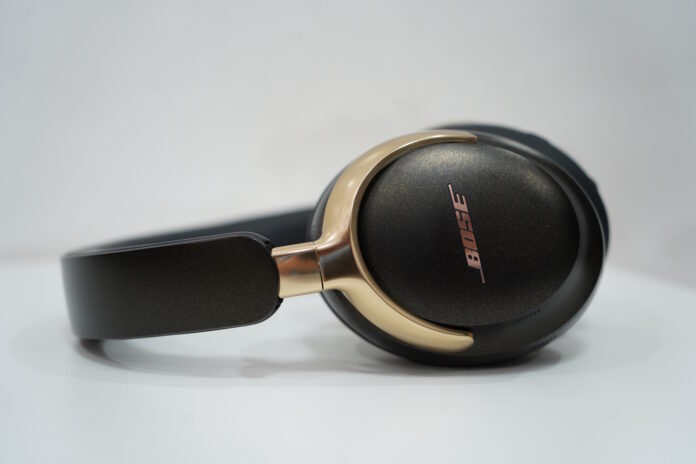
Accessories and build quality are solid. The QC Ultra is on the smaller side for an over-ear headphone, yet it remains extremely comfortable and can easily be worn for hours with little to no discomfort.
It folds nicely and comes with a clamshell carrying case, making it easy to travel with. Design-wise, it’s very business-like and understated, though Bose now offers bolder color options like Driftwood Sand and Midnight Violet if you want something different.
There was a time when Bose could be criticized for not feeling “premium” enough. I’ve always felt that criticism was a bit unfair, since Bose prioritizes comfort and lightweight design. But with the QC Ultra, they’ve clearly stepped things up — incorporating aluminum elements and sturdier plastics while still keeping the headphones light.
Aesthetically, it avoids the bulky or flashy look of some competitors, and I personally really like that.
Conclusion
The QC Ultra 2nd Gen isn’t a radical overhaul, but it doesn’t need to be. It builds on what was already one of the most comfortable and best noise-cancelling headphones on the market and refines the experience where it matters.
You get better battery life, slightly improved tuning, more polished ANC behavior, and the very welcome addition of USB-C wired audio with lossless support. Sound quality is the best I’ve heard from Bose so far, comfort remains class-leading, and noise cancelling is still right at the top.
If you already own the QC Ultra 1st Gen, the upgrade isn’t mandatory. But if features like longer battery life, USB-C audio, and a more balanced tuning appeal to you, it’s a worthwhile step up.
And if you’re coming from an older Bose model or shopping for a premium ANC headphone for the first time, the QC Ultra 2nd Gen is an easy recommendation.
It’s not flashy, and it’s not trying to reinvent the wheel — it just does what it’s supposed to do, extremely well.
Thanks again to Eleksis Marketing for loaning this unit for review. They’ve always supported the channel by sending the latest headphones to check out, so feel free to visit their Bose stores in major malls if you want to try the QC Ultra 2nd Gen yourself.