

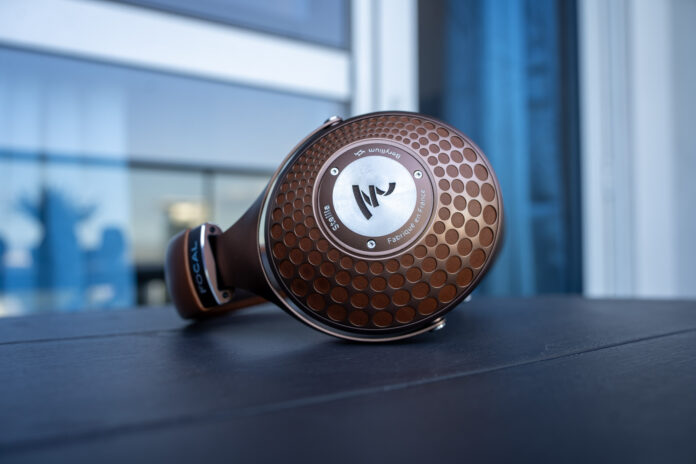

Sound
Let’s get this out of the way. The Focal Stellia is not a neutral headphone, and I’d go as far as to say it has a wonky tuning.
Coming from headphones such as the Focal Utopia OG, HIFIMAN HE1000 Stealth, and HE6se V2, I expected its warmer tuning to require some adjustment. On paper, it isn’t necessarily the kind of frequency response I would normally gravitate toward.
The Stellia carries noticeably more upper bass than a typical neutral reference, places vocals and instruments prominently in the mix, and adopts a more relaxed upper treble presentation. Compared to headphones that closely follow the Harman target or other neutral references, it sounds fuller, more intimate, and slightly darker overall.
Surprisingly, none of these characteristics ever became problematic during my listening.
In fact, one of the biggest compliments I can give the Stellia is that I rarely felt compelled to reach for an equalizer. Despite clearly hearing its tonal coloration, I found myself perfectly content listening to it exactly as Focal intended.
Perhaps my preferences have gradually shifted toward a slightly warmer presentation over the years. Perhaps it’s simply a matter of HRTF. Whatever the explanation, the Stellia consistently delivered a tuning that I found engaging rather than fatiguing.
Measurements from Oratory1990 illustrate these characteristics quite well. The elevated upper bass, forward midrange, and gently relaxed upper treble all deviate somewhat from the Harman target, but measurements alone only tell part of the story. Ultimately, personal preference remains the deciding factor, and listeners who enjoy a richer, more dynamic presentation may actually find these deviations preferable.
I experimented with several community EQ profiles, including those from Audio Science Review and Oratory1990. While they undeniably improved objective tonal balance, they also pushed the Stellia slightly away from what I personally enjoyed about its presentation.
Instead, I eventually settled on a much lighter touch.
Reducing the upper bass slightly while restoring a small amount of energy in the upper mids and lower treble proved to be an ideal compromise. Those subtle adjustments made vocals sound marginally less forward while preserving what I consider to be the quintessential Focal sound.
And that’s perhaps the Stellia’s greatest strength.
Despite its warmer tuning, it never stops sounding like a Focal.
It retains the excellent macrodynamic punch, incisiveness, and sense of immediacy that have become defining characteristics of the company’s flagship headphones. The midrange remains wonderfully fluid, reminding me very much of the Utopia, albeit with a slightly richer tonal balance.
Interestingly, I also found the Stellia exhibits less of the metallic timbre that some listeners associate with Focal headphones. That characteristic hasn’t disappeared entirely, but the warmer tuning helps mask it enough that it rarely drew my attention.
Amplification
One of the biggest surprises, however, was just how easy the Stellia is to drive.
I often found myself plugging it directly into my Xperia Pro-I rather than reaching for a dedicated amplifier. Thanks to its high sensitivity and low impedance, it reaches satisfying listening levels effortlessly while retaining much of its dynamic character.
Paired directly with a phone or laptop, the Stellia delivers a warm, detailed, and engaging presentation that feels remarkably complete without requiring expensive source equipment.
That isn’t to say amplification offers no improvement.
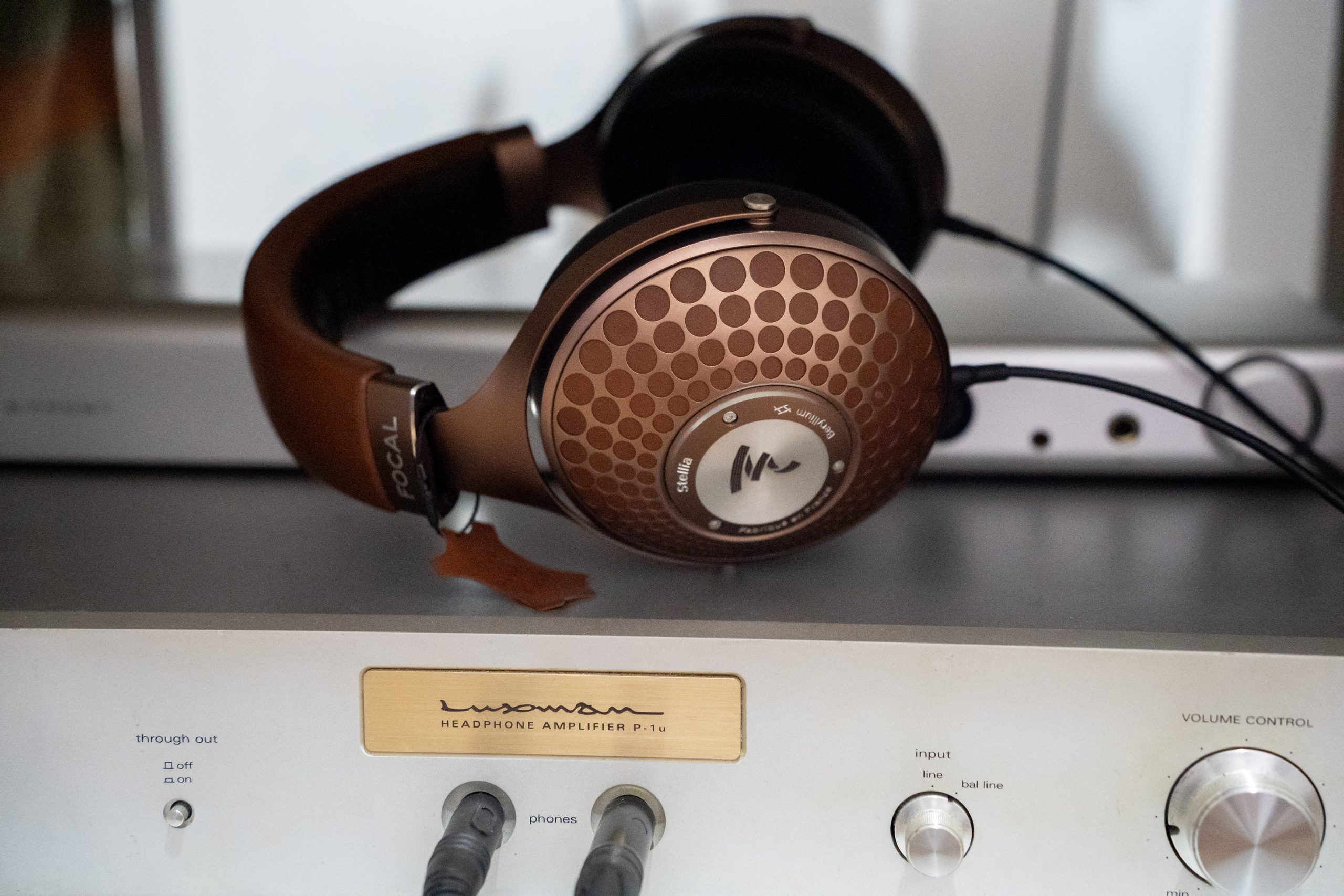
Using my Schiit Bifrost 2 feeding a Luxman P-1u still produces a presentation that I clearly prefer. The sound becomes cleaner, slightly more refined, and maintains better composure at both extremely low and very high listening volumes.
The improvement simply isn’t transformative.
Rather than fundamentally changing the headphone, a quality amplifier serves to polish an already excellent performance.
For prospective owners, that’s excellent news. Unlike many flagship headphones that demand substantial investment in source equipment, the Stellia performs convincingly well from almost anything with a competent headphone output.
Just remember to start with the volume turned all the way down. The Stellia’s sensitivity means it gets loud remarkably quickly, especially when connected to more powerful desktop amplifiers.
Conclusion
The Focal Stellia may not be the newest flagship closed-back headphone anymore, but it has aged remarkably well. It delivers the dynamic punch, detail, and engaging presentation that I’ve come to expect from Focal, while adding excellent passive isolation and impressive drivability that make it far more versatile than many of its peers.
It’s not perfect. The comfort could be better, the tuning won’t appeal to strict neutral-heads, and the styling is certainly an acquired taste. But if you’re looking for a premium closed-back headphone that’s as enjoyable from a smartphone as it is from a dedicated desktop setup, the Stellia remains one of the easiest recommendations in its class.